The Building Bridges Against Trafficking (B-BAT) program is designed to support our partner agencies who directly serve or provide support to Commercially Sexually Exploited Youth (CSEY), survivors of sex trafficking, and young people who may be at risk. As the designated Care Coordinator, B-BAT uses the Texas Model for Care Coordination to bring partners together.
Our team helps:
Care Coordination centralizes essential information. It connects resources, facilitates collaboration among appropriate stakeholders, and helps survivors and their families navigate complex systems.
Partners may include:
The Care Coordinator serves as the single point of contact for all Care Coordination referrals. This role helps everyone stay on the same page.
Care Coordination accepts referrals and service requests from:
The Care Coordinator brings these partners together, encourages safe information sharing and supports a unified plan for each youth and family.
Example: If a youth is missing school, moving between placements and showing signs of trauma, several agencies may be involved. The Care Coordinator helps gather everyone, build one plan and follow up so the youth does not have to tell their story over and over.


“Clear concern vs. confirmed: I think this youth qualifies for services. How can I be sure?” You do not need a confirmed trafficking case to make a referral. If you have a clear concern that a young person may be experiencing sexual exploitation or trafficking — or is at high risk — you can refer them to B-BAT. Tools like the CSE-IT and other screening tools used by your agency can help you think through that concern. If you are unsure, please don’t hesitate to reach out. Our team can: Talk through the situation, Help interpret risk indicators, and Suggest next steps or additional resources. When in doubt, refer. It is better to ask for support early than to wait.
As a partner with B-BAT, you will have access to a coordinated network that prioritizes the needs of survivors and supports your work.
Streamlined communication
B-BAT serves as a central hub for sharing vital information between authorized partners. This makes complex situations easier to manage and reduces confusion or delays.
Enhanced survivor care
We support survivors over the long term, even if case status changes. We aim to make sure no youth “falls through the cracks” when they move, change placements or change service providers.
Access to resources
Partnerships open doors to more services and expertise in the community. This can include advocacy, case management, counseling connections, safety planning and help with basic needs.
Designated Care Coordinator
B-BAT plays a key role in Care Coordination referrals by organizing meetings, tracking next steps and promoting smooth collaboration among partner agencies.
Family care involvement
Our Family Coordinators provide comprehensive support to all members of the household, collaborating closely with the CSEY advocate assigned to assist the identified survivor.
Example: A guardian may feel overwhelmed by court dates, school meetings and therapy appointments. The Care Coordinator and Family Coordinator can help organize information, explain options and connect the family with ongoing support.
Care Coordination team works together to:
Through this model, Care Coordination:
Local and statewide partners are “bridged” together so children, youth and families receive the proper support in a timely and compassionate way.
Care Coordination collaborates with CSEY Advocacy, a specialized service for survivors of child sexual exploitation and trafficking. In addition, Family Coordinators within Care Coordination focuses on the well-being of the entire household, recognizing that guardians and siblings may also feel the impact and need support to heal.

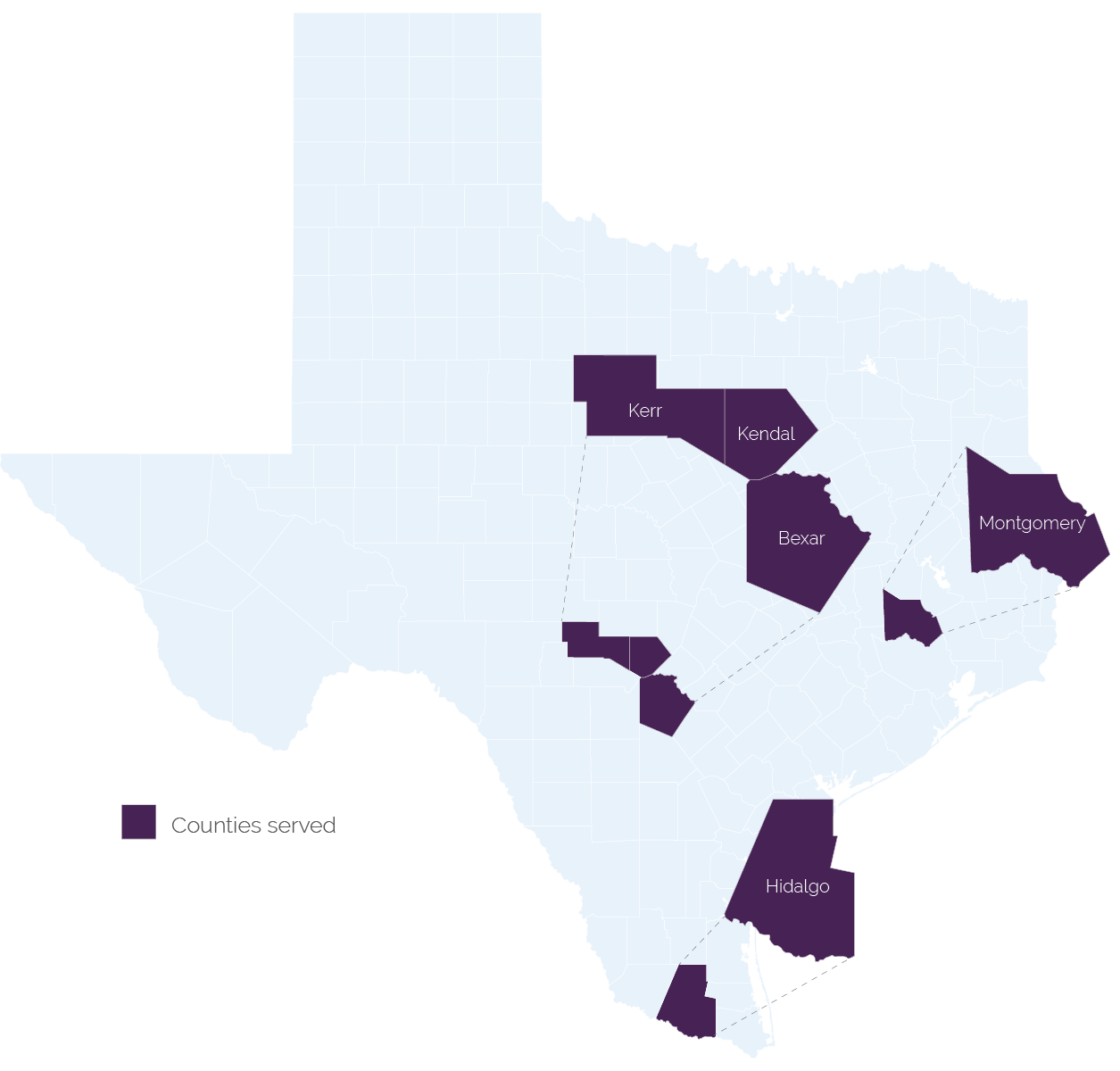
Referrals can be accepted for eligible individuals within our five-county service area:
If a youth or young adult has a connection to these counties, we assess their situation and help to connect them to the appropriate services.

Potential, suspected, or confirmed survivors of sex trafficking.

Youth up to age 18 in Bexar County.

Youth and young adults up to age 24 in Kendall, Kerr, Hildago, and Montgomery counties.

People of any gender identity.

Individuals physically in the service area, traveling to the service area or who were victimized in the service area but now live somewhere else.

Yes. You can refer yourself, a family member or someone you are concerned about.
We help by bringing everyone involved together to collaborate, care and connect you to services that best meet your needs. This may include advocacy, case management, safety planning, counseling connections and other supports for survivors and their families.
No. Law enforcement involvement is not required for you to receive services.
That is OK. We will work to connect you with an agency that provides services in your local area.
You may still be eligible. Healing takes time, and it is never too late to ask for support.
No. We accept referrals from any agency, even if there is no formal memorandum of understanding.
No. Services are available to everyone who meet the eligibility criteria, regardless of immigration status.
No. You do not have to use any label. Services are available to anyone referred to our program. If we determine that another agency is a better fit, we will help connect you to that program.
No. Our Family Coordinator can provide services to guardians and other children in the home who need support.